Preparing · 4 min read
You do not need to empty the house. For most interior jobs the useful preparation takes about half an hour a room, and it is mostly moving small things out of the way rather than heavy lifting.
Here is what genuinely helps, what to leave to the painters, and the handful of things worth telling us before the first morning so the job runs to the schedule we quoted.
What we handle, and what helps if you do
Moving and covering furniture, masking fittings, laying drop sheets and protecting floors are all part of the job and all in the quote. You do not need to shift a wardrobe or wrap a lounge before we get there.
What saves real time is the small stuff, because it is the part only you can sort. Anything personal, breakable or fiddly is quicker for you to put away than for us to work around, and every item left on a shelf is one we have to handle twice.
The half hour you spend clearing a room is the half hour we do not spend moving your things.
Worth doing the day before
- Clear shelves, mantels and window sills of ornaments and photos
- Take down wall hangings, mirrors and anything hooked to a picture rail
- Unplug and move televisions, computers and small appliances
- Empty the drawers of anything that has to be carried
- Take down curtains, and let us know if blinds are staying up
- Put valuables and important paperwork somewhere else entirely
Nails, hooks and light fittings
Leave the nails and hooks where they are unless you know for certain you are not putting that picture back. Pulling them creates a hole that needs filling, sanding and spot priming, and if the frame is going back in the same place you have paid for repair work you did not need.
The same goes for fittings. We mask around switch plates, power points and light fittings as a matter of course. If you want a fitting removed rather than masked, say so at the quote rather than on the morning, because anything hard wired needs an electrician and that is a separate trade with its own timing.
Things worth telling us before day one
Most schedule slips come from something nobody mentioned. None of the following is a problem on its own, but each one changes how a day is planned, and finding out at eight in the morning is what turns a three day job into four.
Mention these when you book
- Where we can park, and whether there is a permit or a time limit
- Access to the back of the property, side gates and any locked areas
- Alarm codes, or who to call if one goes off
- Pets, and which rooms they need to stay out of
- Rooms that have to be usable each evening, or quiet at set times
- Any spot you already know is a problem, such as flaking or water stains
- Whether the place is in a strata scheme with its own rules or hours
If the house was painted before the 1970s
Older Newcastle housing stock can carry lead based paint under the current colour. It is common in weatherboard cottages and terraces around the older suburbs, and it is not a reason to panic, but it does have to be handled properly rather than dry sanded.
Tell us the rough age of the place when you book. It changes the preparation method and the site setup, and it is far better priced into the quote at the start than discovered halfway through a wall.
Pets, children and working from home
You do not need to move out. Interior work is staged room by room so the house stays usable, and the site gets packed down each evening. What helps is knowing the shape of your day in advance.
If you take calls from a particular room, tell us and we will sequence around it. If a toddler naps after lunch, the noisy preparation can happen in the morning. Pets are the one thing we genuinely need managed, less for the mess than because an open front door and a nervous dog is a bad combination.
What happens on the first morning
We walk the job with you before anything comes off the truck, confirm the colours and the sheen level against what is in the quote, and agree the order of rooms. This is the moment to change your mind on a colour, not after the first coat.
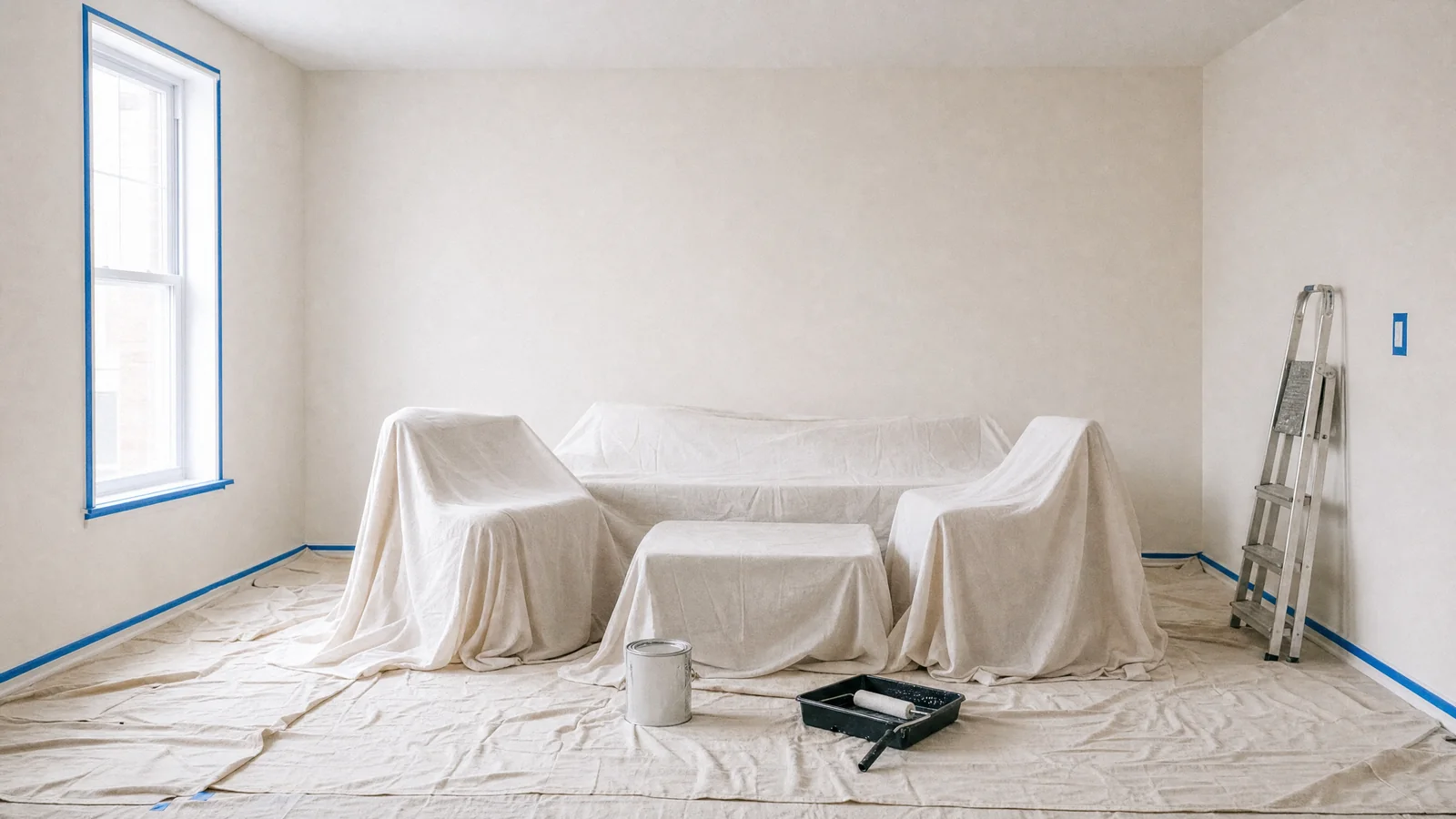
Then the room gets set up: furniture to the centre and covered, floors protected, fittings masked, and the preparation starts. Nothing gets painted until the surfaces underneath are ready for it, which is why the first day of a job often looks like very little painting.
After the last coat
We walk the finished job with you in daylight, because that is when you see everything. Anything not right gets sorted then rather than left on a list.
Give the paint a little time before you treat it like a normal wall. Most trade paints are touch dry within hours but keep hardening for weeks afterwards, so hold off on scrubbing marks, taping anything to the surface, or pushing furniture hard against it. We will tell you the specific timings for the products used on your job.